The
Warren Fellowship for Future Teachers at the Holocaust Museum Houston offers a unique program for preservice teachers who want to learn more about how to teach the Holocaust and combat antisemitism. In today's world, where hatred and hostility are more prevalent than ever, we need to lay the foundation for empathy and understanding in the classroom. By learning about history and the decisions that led to this genocide, teachers can educate students more effectively and prepare them as stewards of a more humane world.
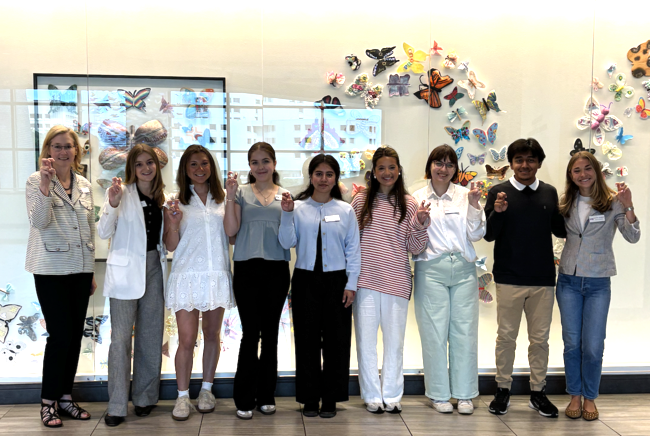
We completed the Warren Fellowship in 2026. In our following reflection, we share the biggest takeaways for other preservice teachers and early stage educators looking for practical methods of teaching the Holocaust.
The power of personal narratives
Primary sources, such as personal testimonies, can help to remind students that these were real people with real lives and futures that were affected by the actions of Nazi Germany. We recommend using reflections from Holocaust survivor Naomi Warren to add a personal connection to these events.
Warren was born on September 1st, 1920, and grew up in Wołkowysk, Poland. She had a typical childhood until 1939, when World War II began. She endured experiences in various concentration camps, where she survived harsh conditions such as starvation and abuse. Her testimony emphasizes the importance of staying strong in spirit and hope. She said that, "Friendships in camp were very important because you had to have a moral support system." In difficult times, empathy, friendship, and understanding are powerful tools for survival.
Holocaust survivors are not just historical data, and Warren reminds us that every one of these people had their own unique stories. They were individuals with families, dreams, and relationships. Personal narratives such as Warren's can build students' ability to connect emotionally and develop critical thinking skills.
Selecting age-appropriate picture books
Finding age-appropriate sources can introduce difficult topics to elementary students in educational ways. Educators should focus on themes such as kindness, fairness, identity, and human responsibility. By carefully selecting literature and testimonials, educators can help students learn about prejudice and empathy in developmentally appropriate ways.
We recommend picture books such as
The Whispering Town by Jennifer Elvgren, which introduces students to courage and helping others through a story about Danish citizens who protected Jewish families during World War II. Students should be encouraged to write and process their emotions, ask questions, and connect personally to historical themes.
In reflections, teachers might ask students questions such as:
- Why are personal stories important in history?
- What responsibilities do individuals have when witnessing injustice?
Children's literature can serve as both a mirror and a window for students by helping them see their own experiences through learning about others' lives. Picture books are powerful tools because they combine text and illustrations to scaffold difficult topics and foster empathy.
Becoming stewards of exceptional literacy instruction

We believe educators have a responsibility to teach difficult history thoughtfully and responsibly. Literacy instruction is not only about improving reading and writing skills. Literacy instruction helps students understand humanity, ethics, and the consequences of human choices.
Teachers can use meaningful discussions, primary sources, and personal narratives to help students build empathy and historical understanding. Encourage students to think critically about the world around them. Warren reminds us that, "It is important to understand that big changes, the kind that transform the way human beings handle being human, start with small changes."
Holocaust education should move beyond memorizing dates and statistics by centering personal narratives in literacy-based instruction. This begins with small classroom conversations and meaningful stories, all in an effort to teach empathy, kindness, and historical understanding.
As Warren Fellows, we are committed to taking this approach into our classrooms to help students better understand the past and ultimately encourage compassion between one another. By using developmentally appropriate literature, survivor testimony, diaries, and primary sources, we will create meaningful learning experiences that encourage empathy, critical thinking, and civic responsibility for future generations.
Editor's Note: Ella Alvarado, Manuel Barcenas, and Anna Fazio are all recent graduates of Texas Christian University who are currently pursuing master's degrees in Curriculum and Instruction: Language and Literacy.
You may also like
In the Age of AI, Critical Literacy Starts in Preschool
Please RSVP: Inviting Children's Picture Books Back Into the Classroom