Literacy Now

In Other Words
ILA Membership
ILA Next
ILA Journals
ILA Membership
ILA Next
ILA Journals
  • This was my first year at the IRA conference. There are a lot of reasons why I didn't go before, but, mostly, there was this: it felt like a lot of money, and I didn't know anyone else who was going.
    • Blog Posts
    • In Other Words

    First-Time Attendee Pens an Open Letter to Those Not Able to Attend IRA 2014

    by Jenny Rich
     | May 20, 2014
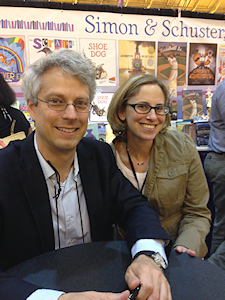
    Jenny Rich & Brian Floca at IRA 2014
    Jenny Rich with Brian Floca at IRA 2014

    Dear Colleagues,

    This was my first year at the IRA conference. There are a lot of reasons why I didn't go before, but, mostly, there was this: it felt like a lot of money, and I didn't know anyone else who was going. Those things were still true this year (though—full disclosure—I had a friend/colleague/mentor there on the first day) but I decided to give it a try anyway.

    Here is what I can tell you: Attending IRA 2014 was one of the best professional experiences of my life. I wish I had done it sooner. It might have changed the course of my career (really!) because my teaching and my network would have been so different.

    You see, what I didn't know is that IRA is a celebration of the profession of teaching. Walking into the first opening session (to see Jeff Kinney speak, no less!) felt like walking into a concert, complete with flashing lights, fun music, and giant beach balls sailing around the room. I knew immediately that this was going to be like nothing I had experienced before.

    Jeff Kinney set the tone for the conference, telling a room full of teachers that he believes "putting books in the hands of kids is a sacred act." This was after he explained that he walked away from being a cartoonist for a while—that he needed to put in his 10,000 hours to become an expert at writing and cartooning.

    It was a moment of revelation: if even Jeff Kinney had to work this hard to be an expert, well,it's okay that writing doesn't come easily. Not to us, sitting in the audience, not to the kids we teach…. He was one of us! We were a room full of writers, united for a moment by the hard part.And Jeff Kinney made the hard part okay.

    And that's when I realized that IRA was a place that would bring teachers together. It would make the hard parts of our days, our challenges, a source of camaraderie rather than isolation.

    The conference continued this way, bringing teachers together in the most unexpected ways.We stood together in lines to get the most incredible swag. Leather tote bag from Scholastic? Got it! A tiny little speaker that plugs into my phone or tablet from Amplify? Yes, got that, too! How about the pounds and pounds of free books, many of which were signed by the authors? Got so many of those that I had to ship them home.
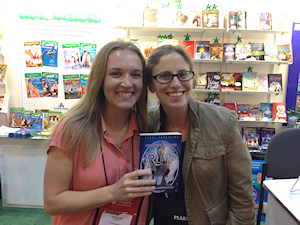
    (I mentioned that one reason I had waited to go to IRA was because I was concerned about cost. Well, I am fairly certain that if I were to add up the value of just the swag alone, the conference would pay or itself.)

    The best part about the lines, though, was talking to the people I was waiting with—the coming together of teachers.

    I got everything I needed from IRA, and found things that I didn't know I wanted. I met teachers from Kentucky and Kansas, from Minnesota and Canada. I met authors, both because I sought them out, and because they were everywhere, signing books and leading sessions. I listened to research from some of my personal heroes like P. David Pearson and Tim Rasinski, and then heard classroom applications of research from literacy rockstars, including (but not limited to) Chris Lehman and Donalyn Miller (though not together, though that would be REALLY cool.)

    I walked away each night unable to fall asleep. At IRA I spent days surrounded by people who not only "got it," but who were inspiring. Dav Pilkey, the incomparable author of the Captain Underpants books (a favorite in my house) told a packed auditorium that "our job is to help kids discover the clues to the universe in what they choose to read." He also said, "There is a reading revolution going on under our noses, we just have to get out of the way. "Well, all right! That's the way to start a day, isn't it? As I walked out of his opening session, I overheard one teacher say to another, "I've always kept his books out of my classroom, but now I want to buy every single one!" That's the kind of impact IRA had.
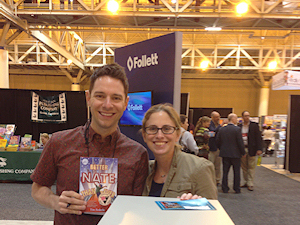
    Every session, every moment spent in that convention center was one of inspiration, innovation, and collaboration. I have a notebook full of ideas waiting to be implemented, from how I communicate with students to ways in which I hope to get more involved with IRA going forward. My Personal Learning Network (PLN) on Twitter has expanded, which means that the learning that started at the conference will keep going for me. And, of course, I am already looking ahead to next year in St. Louis, a mantra at this year's conference.

    So, you see, going to the conference was a game changer for me. I am so grateful that I took this opportunity to attend this year, and—again—wish that I had done this sooner. For years I was an elementary school teacher, and, at times, I felt isolated in my practice (because, of course, this was before Meenoo Rami wrote her brilliant book Thrive:5 Ways to (Re)Invigorate Your Teaching, which I read in my hotel room in New Orleans). Now I teach preservice teachers, and want to make sure that they don't go through those periods of uncertainty in their own practice.

    And so I write this letter to my current students who are about to enter the field, and for the teachers who, like me, are unsure if the IRA conference is really for them. It is.

    You will leave enriched, connected, engaged, and eager to return home to your colleagues, students, and classroom.

    You will remember why you became a teacher in the first place.

    You will remember, as Jeff Kinney and so many others reminded us, that you are not alone in feeling challenged, and that the good stuff lies on the other side of those challenges.

    I hope to see you next year, in St. Louis.

    Jenny

    Jenny Rich is an adjunct instructor in the School of Education at Rider University in Lawrenceville, New Jersey, and a doctoral student at Rutgers University.You can find her on Twitter at @jdrich219, and will see her at IRA 2015 in St. Louis.

     
    Read More
  • You’re off to a big conference and you know it’s gonna kick butt! Great speakers, diverse workshops, lots of people geeking out over things you yourself love to geek out about.
    • Blog Posts
    • In Other Words

    Maximizing Your Conference Experience

    by Alan Sitomer
     | May 16, 2014

    You’re off to a big conference and you know it’s gonna kick butt! Great speakers, diverse workshops, lots of people geeking out over things you yourself love to geek out about.

    Indeed, good times are on the way. Best of all, it’s perfectly fine to break your diet. After all, conferences and dessert go hand-in-hand like, well… dessert and conferences. You can skip the molten fudge chocolate lava drama cake back home when it’s just a regular ol’ out-to-dinner night but when you’re advancing your pedagogical skills at a ferocious clip, it’s practically your academic duty to plunge in your fork, both wide and deep.

    After all, you’re not doing it for yourself; you’re doing it for the kids!

    To help maximize the benefits of attending this year’s brain exchange, here are five tips that can assist you to get the most out of this year’s shin-dig—steps to take AFTER you arrive home (and renew your vows to go to the gym).

    Experience has taught me that managing the conference is fairly straightforward; managing all the information/follow-ups/things to do and people to contact afterwards, however, is a valuable skill worth knowing.

    Note: All of these tips are unified by the critical belief that you must carve yourself out a few uninterrupted minutes—not hours, but minutes—after you leave the conference to maximize your attendance benefits.   

    Tip #1: Plan for a Sift Through (10–15 uninterrupted minutes)

    Conferences are like an all-you-can-eat buffet where a ton of the food is good, good, good. And while you are there it is often wise to gobble, gobble, gobble as much as you can. But once you touch down on the home front, not every last bit of material you took home with you is going to meet your post-conference needs.

    That’s why you plan for a sift-through.

    After all, lots of presenters hand out materials, lots of Exhibit Hall folks give out informational brochures, and lots of people say things at lunch, while riding elevators, or while waiting in the bathroom lines. (That would be the ladies room, mind you—there is never a line for the guys, a chronic issue of conference gender bias decreed by no less than Mother Nature herself.)

    Give yourself ten to 15 uninterrupted minutes (I really can’t stress the UNINTERRUPTED part) to thoughtfully filter through your take-home material and notes.

    Don’t be afraid to categorize either:

    • Pile 1: AWESOME stuff! For sure has value.
    • Pile 2: Good stuff, worth keeping
    • Pile 3: The jury is still out on this stuff
    • Pile 4: Bzzzp! Why did I bother to schlep this home? 

    Tip #2: Schedule your “follow-ups” (5–10 uninterrupted minutes)

    There are people you’ll want to send emails to in order to say “thank you.” There are people you’ll want to send emails to in order to say in order to say “great to meet you.” There are people you’ll want to send emails to in order to say “screw you.”

    Kidding! (Don’t send those.)

    Thing is, it’s far too easy to get back home, slide into the piles of work that grew from molehills to mountains (or from mountains to Mt. Everest!) while you were away and neglect to do the follow-ups which you really wanted/needed to do.

    Plus, doing these follow-ups in a timely manner is often important. After all, did you ever get an email from someone that said, “Hey there, remember me? We chatted about X while grabbing a quick salad on that Saturday afternoon at that really awesome, big conference… like seventeen weeks ago?

    Um, no.

    But since we’re all pretty much polite we respond by saying, “Oh yeah… remind me again…” And what happens is that which could have been a very real, very meaningful connection that brought real oomph to something in your world ended up fizzling out simply due to its poorly timed follow up.

    Within a week after you have “landed back home” make sure you have done your “connects.” Trust me, it pays off.

    Tip #3: Do a Big Picture reflection (5–10 uninterrupted minutes)

    The immensely popular system of Cornell Note Taking stresses the “Summary” section with a great deal of emphasis. Why? Because after you digest a lot of new material, taking a moment to reflect, paraphrase, and summarize anchors the learning and opens pathways to deeper understanding, fresher insights and yes (to go all brain-based research on you) more dynamic connections between newly created neurological pathways.

    Here are four questions you might want to try and answer:

    • What was your best experience of the conference? Why?
    • What was the one thing you learned that stuck with you? Why?
    • What skill do you now realize you need to add to your bag of tricks? (You can’t learn everything, but you can add something.) Why?
    • Who can you connect with upon returning home in regards to the conference? (i.e. maybe it’s someone you met, maybe it’s a colleague at home worth having some new discussions with, and so on.)

    Tip #4: Download that New App and noodle with it (10 uninterrupted minutes)

    Inevitably, someone introduced you to a cool new app that sparked your imagination… but the conference just wasn’t the right time and place to get a good grip on it.

    Here’s a means by which you can ramp up your digital skill set in the world of apps (and/or new software, as well):

    1. Download the app that caught your eye.
    2. Set a timer for 7–9 minutes. Start the timer and DO NOT allow yourself to judge the app or your own ability to use it until the timer goes off.
    3. Play with the app. Experiment, make mistakes, try things. Most importantly, refuse to judge or give up until the timer goes off.
    4. Reflect. Do you want to:
      1. Seek out help with the app by asking someone?
      2. Seek out help by jumping online and searching for tips? (Often there are videos out there which really can move mountains.)
      3. Click your heels cause you are WAY excited and now own a new tool that is gonna help a ton.
      4. Trash the app and just say, “Hey, I tried… not for me.”

    Tip #5:  Share! (time factor up to you)

    Look, there are people who wanted to go the conference who did not get to attend for one reason or another. Go find them and hook them up with a tidbit, a piece of data, a new idea or even a tool. Conferences are all about generosity.

    Did you hear about a great new book for reluctant readers? Tell someone. Did you grab a PowerPoint that you know a colleague will love? Turn them on to it. Sharing feels great and often when we come to our professions with the aim of giving we end up getting a whole lot more.

    After all, these tips were free, weren’t they?

    Alan Lawrence Sitomer was California's Teacher of the Year in 2007. He is also the author of multiple works for young readers, including Nerd Girls, the Hoopster trilogy, “The Secret Story of Sonia Rodriguez,” “Cinder-Smella,” and “The Alan Sitomer Book Jam.” He lives in Los Angeles with his wife and daughter. In addition to being an inner-city high school English teacher and former professor in the Graduate School of Education at Loyola Marymount University, Alan is a nationally renowned speaker specializing in engaging reluctant readers who received the 2004 award for Classroom Excellence from the Southern California Teachers of English, the 2003 Teacher of the Year honor from California Literacy, the 2007 Educator of the Year award by Loyola Marymount University and the 2008 Innovative Educator of the Year from The Insight Education Group. Visit him online at www.alanlawrencesitomer.com.

     
    Read More
  • "I am not here to entertain students. I am here to teach them to learn specific content and skills," commented a teacher in a workshop we were conducting. Imagine her surprise when we agreed with her!
    • Blog Posts
    • In Other Words

    Engage Students (and Entertain Them a Little, too!)

    by Michael F. Opitz and Michael P. Ford
     | May 08, 2014
    Engaged Children in the Classroom
    photo credit: horizontal.integration
    via photopin cc

    “I am not here to entertain students. I am here to teach them to learn specific content and skills,” commented a teacher in a workshop we were conducting. Imagine her surprise when we agreed with her!

    In our research on motivation and engagement, which led to creating our joyful learning framework, we discovered that the terms engagement and entertainment are often used synonymously when they are anything but alike. Below, we point out the differences and provide some student engagement suggestions. We are drawing these thoughts from our most recent work, “Engaging Minds in the Classroom: The Surprising Power of Joy.”

    What is engagement?

    Wlodkowski and Ginsberg (1995) defined engagement as the visible outcome of motivation, the natural capacity to direct energy in the pursuit of a goal. It usually happens when learners can sense success is within their reach, they value the outcome of the learning experience, and they feel safe in the classroom setting (Brophy, 2008).  

    Engaging  Minds in the Classroom: The Surprising Power of JoyAttentive, committed, persistent, and meaning seekers are four characteristics of engaged learners (Schlecty, 2011). During a whole-group lesson, a teacher would look for attentive students who are focused on completing a given task and persist if the task becomes difficult because they value what they are doing and derive meaning from it.

    One sure way to double-check these observations is to talk with students as they complete their work and listen to what they have to say about it. Engaged students might make comments such as “I am having trouble understanding this section but I really want to know about how gravity works. I think I need to look at more of the diagrams to help me understand.”  


    So what is entertainment?

    The difference between entertainment and engagement is clear if we just think about the two words. We know that entertaining students is fairly easy (remember the Friday afternoon video?). As Katz and Chard (2000) remind us, engagement involves getting students interested in the word around them.

    If students become interested in their world, they will always be able to find something that interests them in their lives. Engagement draws us into our daily lives, whereas entertainment does the opposite; we seek it out to distract us from our daily lives. It diverts us from attending to important matters. In the end, entertainment is fairly fleeting and short-lived.

    So why make the distinction between these two terms?

    As educators, our job is to engage students rather than entertain them. We get them engaged by providing tasks that enable them to be attentive, committed, and persistent learners who strive to understand what they are learning, which leads to sustainable and longer-lasting pleasure than when they are entertained. Engaged students and teachers derive joy and pleasure from what they do; they do not need to be entertained (Schlecty, 2011).

    So what does this mean for educators?

    While we emphasize the importance of engagement over entertainment, we also recognize that a bit of entertainment can lead students to engagement. In these instances, we want to use entertainment. For example, we might decide to dress up as a historical figure to engage students in learning about that figure. Or we might use a humorous story to entice students to learn content.

    We fully recognize that having fun allows students to build social relationships. Rather than seeing engagement and entertainment as an “either/or” issue, we suggest using both in purposeful ways to gain a full understanding of how engagement and entertainment contribute to the larger picture. Entertainment becomes a means rather than the end.

    Using props, humor, and other activities that students find fun in purposeful and meaningful ways can lead to engaged students. Engaged students are more joyful in their learning pursuits. As a result, their learning is learning with staying power. In essence, joy leads students to learning rather than away from it.

    You can see Michael F. Opitz and Michael P. Ford at IRA's 59th Annual Conference in New Orleans, when they present, "Using Joyous Effort to Engage Learners and Create Urgency, Agency, and Responsibility" on Saturday, May 10th, at 1 p.m.

    Michael F. Opitz is professor emeritus of reading education at the University of Northern Colorado, where he taught undergraduate and graduate courses. An author and literacy consultant, Michael provides inservice and staff development sessions and presents at state and international conferences and also works with elementary school teachers to plan, teach, and evaluate lessons focused on different aspects of literacy. He is the author and coauthor of numerous books, articles, and reading programs.


    Michael P. Ford is chair of and professor in the Department of Literacy and Language at the University of Wisconsin Oshkosh, where he teaches undergraduate and graduate courses. He is a former Title I reading and 1st grade teacher. Michael is the author of 5 books and more than 30 articles. Michael has worked with teachers throughout the country and his work with the international school network has included staff development presentations in the Middle East, Europe, Africa, South America, and Central America.


    Friends and colleagues for more than two decades, Opitz and Ford began working together as a result of their common reading education interests. Through their publications and presentations, they continue to help educators reach readers through thoughtful, purposeful instruction grounded in practical theory.

     
    Read More
  • I do not remember how many times I have been hit in the head, but a good round of Primus Hoops allows the voices of my students to rise above the everyday angst and annoyances many teens typically articulate.
    • Blog Posts
    • In Other Words

    Listening In: The Impact of Adolescent Lit in Teacher Research

    by Nakeiha Primus
     | May 01, 2014
    Basketball
    photo credit: kitakitts via photopin cc

    I start each morning circumventing basketballs launched across my classroom. This sport, a cross between dodge-a-desk, WWE wrestling, and Fisher Price basketball, is the epicenter of my homeroom. With the buzz of computers newly aglow after a night's slumber, the frenetic motion of feet avoiding "fouls," and the charged murmur of voices hovering in the atmosphere, I have somehow been able to glean essential wisdom from my students during this time. I do not remember how many times I have been hit in the head, but a good round of Primus Hoops allows the voices of my students to rise above the everyday angst and annoyances many teens typically articulate. It is in these moments coated with youthful zeal, that I get the best "stuff" for class. My students unwittingly help me keep the “adolescent” integral to our study of literature, particularly as we explore young adult themes.

    My first formal attempt to maximize the impact my students' opinions had on what we studied came in 2010 after a conversation with RJ, a student frequently willing to test the limits of inquiry. At the time, we'd just finished reading Twelve Angry Men. My ears rose to attention when I heard him grumble about the play. His tone and affect were peculiarly reminiscent as I envisioned myself as an inquisitive teen. His description of the text as "boring" and "depressing" crept into my multitasking teacher sphere, and I called him out. Our conversation morphed into a class discussion, as he led the charge. I wanted to know what the boys thought and asked what could be better. While it could have been the kiss of death for me, this impromptu conversation encouraged a closer look at the other texts we read in class. 

    Though seemingly haphazard, their venting tapped into a truth. There were areas of their lives and their stories as they lived them, which were invisible in the texts. Issues of gender (“how do girls think about this, Ms. P?”), sexuality, race, and what it means to be “a man” became constant themes the boys wanted to explore in literature. I began to see that student voices and experiences could provide useful insights as I planned activities and chose texts. My students could be co-collaborators for our English literature curriculum. This realization prompted a formal research project entitled Listening In: Boys and Curriculum Meaning Making.

    I continued to have informal conversations with students about the literature we read, their interests, and the kinds of experiences they had in English class. I wanted to know a few things:

    • What do boys "get" from English literature? What do they “want” from it?
    • What role can they play in the development of English curriculum? Does it matter that they do?
    • How do I (as a teacher) influence what they experience in class?

    I kept a record of poignant interactions on a blog, crafted field notes, and formalized the process by obtaining appropriate permissions to record (both video and audio) my students. This work was further validated when IRA granted complementary funding through the Teacher-As-Researcher grant program.  As a pretty novice researcher working with teenagers, Murphy’s Law abounded daily, but this project has had an indelible impact on my growth as an English teacher.Here’s an early excerpt from my blog notes: 

    October 27, 2010

    Underway...

    It's been a bit more than a week since my last post and Listening In is in full swing at The School. The boys really seem interested in delving more into themselves as they explore characters, talk about what it means to be a young man, and engage with each other.

    By happenstance I found a really interesting short story by Lois Gould titled, “X: A Story of Childhood.”  I'd already chosen my "gender" short story for this project, but I couldn't help using it. The story centers on a baby raised in a unique experiment; could a child be raised gender neutral? In the story, Mom and Dad go against the grain in their interactions with Baby X (Mom teaches the baby about sports; Dad encourages cooking and Barbies). The boys were perplexed with such an idea at first. They asked questions that centered around biology (genetic "sex") and how Baby X would fare in adolescence. We discussed the feasibility of such an experiment and then I had the boys craft a "glimpse" of what life would be like for X as a teen. What advantages or difficulties would X face? What the boys produced was great. It was one of their first creative writing opportunities and they excelled. The story was a great prelude to short story chosen for the project, "Girl."

    Yesterday, I decided to have the boys write down a typical day's schedule (from the moment the wake up until they fall asleep). Last week, I'd asked the boys to think about how being a boy influenced their home lives. Do they have specific responsibilities or chores? Are they expected to carry themselves in a particular fashion (either at home or because of what they've been taught at home)? The responses that I received were good, but they didn't necessarily get as specific as I'd hoped. I decided to break down the task even further. How could I get at those expectations, chores, and tasks without frankly saying that's what I was looking for?

    I came up with a few things I could use for daily writing prompts:

    • typical day's schedule
    • manners learned at home or expected at home
    • what does a mess look like? Smell like? How would this compare to how a girl might answer this question?

    The boys really enjoyed writing down their daily schedule. When we discussed them, I asked what patterns they observed. Who determines what you do when? What kind of routines do you have? I learned that some loved watching the same TV show at the same time every day. Others had the exact same snack every day. Still more had responsibilities that actually broke gender stereotypes. A few had cooking responsibilities or laundry duty. Older brothers were entrusted to care for younger siblings, particularly girls.

    After this task, I assigned Jamaica Kincaid's very short story, "Girl." We've simultaneously been learning and writing with semi-colons/commas, so the boys have been quick to point out the grammatical nuances of the story. Later this week, we'll discuss the story in depth. I wonder if they'll see how each of the daily writing prompts (written from their male perspective) relates to the protagonist of the story.

    Signing off...

    How often do our curricular prep, text choices, and classroom activities respond to or reflect the musings or misanthropic murmurs of 21st century teens? Should they? As a teacher, I have realized that too often, we perpetuate those very norms our adolescent students despise when it comes to speaking up, voicing an opinion, and offering an unadulterated perspective. We hush them, take it personally, and quip that they’ll “understand when they get older.” We don't mean to do it. It’s kind of par for the course. There are plenty of people, situations, and "things" that occupy our brains at any given moment, so the grumblings of students are invariably “tuned out.” Yet, we know, whether through positive behavior or non-compliance, their thoughts influence how we “do school.”

    Come see Nakeiha Primus present on “Co-Creating with the Boys: Rosenblatt in Praxis” at the Becoming a Teacher Researcher: Exploring IRA’s Teacher as Researcher Grant research workshop at the IRA 59th Annual Conference on Sunday, May 11, 2014, at 11:00 a.m.

    Nakeiha PrimusNakeiha Primus Nakeiha Primus currently teaches English at the Haverford School. She completed her undergraduate studies in English and American studies at Tufts University, obtained her MA in teaching degree from Duke University, and is currently a Ph.D candidate at the University of Delaware. Her research merges interests in curriculum theory, literary theory, and socio-cultural approaches to learning. She loves contemporary literature of the Americas, but has an immense soft spot for Shakespeare, adolescent literature, and West African poetry. Visit her blog, mid/scribble, and follow her on Twitter (@docpr1me).


    Read More
  • Seeking to attract all kinds of readers: eager readers, aliterate readers, reluctant readers, readers stuck in one genre, and even adult readers? Try a Choices Chat or book discussion!
    • Blog Posts
    • In Other Words

    Let's Talk about Books, Baby: The Beauty of Book Clubs

    by Nancy Baumann
     | Apr 30, 2014

    Seeking to attract all kinds of readers: eager readers, aliterate readers, reluctant readers, readers stuck in one genre, and even adult readers? Try a Choices Chat or book discussion!

    After constantly listening to the same tired dialogue about why kids aren’t reading—they don’t have time anymore, they’d rather be gaming, books are so long and boring, and (my favorite!) boys don’t read—I introduced several informal opportunities for kids and adults to read, gather, and talk about books. The response was positive and sometimes overwhelming. Some of the chats attracted up to forty readers at a session!

    My book discussion groups grew from two needs from teachers and one request from students. The teachers’ request stemmed from the Children’s Choices project, a joint venture between the International Reading Association (IRA) and Children’s Book Council (CBC). The fifth and sixth grade students weren’t reading and voting enough, she said. Beyond making the Children’s Choices books easily available to students in the classroom or putting them on display in the library, students needed encouragement to read and vote. Yet teachers and librarians are not permitted to book talk or promote the titles since the students must be free to select, comment, and vote on the books without any influence from adults.

    The student request came from kids complaining about the Newbery Award books, and how they are selected by adults who couldn’t understand what kids like to read and what is “distinguished” literature for readers ages birth to 14.

    Thus, the “Choices Chats” and “Mock Newbery Book Club” were created to give students a forum to present and talk about the Children’s Choices books and Newbery contenders they read with peers. These discussion groups offered a safe community to express views and ideas. Oh, some also had food!

    We selected lunch time for the chats. This is the only time that didn’t interfere with anything else. Three librarians agreed to host them in their libraries. Kids brought their lunches into the library once a week for 25 minutes to talk about the Children’s Choices selections. Each librarian publicized the chat with their fifth and sixth graders. To our great surprise we had 10–15 students weekly at the elementary school, 25–30 at one middle school, and an entire third grade class at a second elementary school.

    Here’s how it worked: Students received a pass from their language arts or homeroom teacher to be able to leave the lunchroom. They walked to the library with trays/bag lunches, signed in, grabbed a snack, and prepared to talk and listen. Everyone was required to bring the book they were reading to show as they talked. To keep discussions from getting stale, colored candy (Skittles, M & M’s, Sour Patch Kids) were used as discussion starters. Kids sat at library tables or on the floor and ate lunch while taking turns presenting their current read.

    We used a stopwatch to limit each speaker to two minutes. It’s helpful as it gave everyone a chance to talk. Kids can easily run the stopwatch and gently remind the speakers when their time is up. By request from students, these chats have been extended to the end of the school year. Additionally, and upon request, seventh and eighth grade “Choices Chats” groups have been started. All of the chats feature books that are self-selected.

    “Read ’n’ Feed” is a variation on a lunchtime book discussion group. Using the professional title “Fiction, Food, and Fun: The Original Recipe for the Read ’n’ Feed Program” (Closter, Snipes, and Thomas, 1998) as a guide, I collaborated with a local teen librarian to facilitate this book discussion. We initiated our “Read ’n’ Feed” program at my middle school library. We book talked four different titles and the seventh grade students checked out the book they were most interested in. Kids had a two-week deadline for reading the novel.

    Through a grant from the school district we were able to purchase 20 copies of four different titles. We limited each discussion group to ten students and repeated the discussion (Tuesdays and Thursdays) over a semester. Subway pitched in and delivered sandwiches, a drink, and a cookie at a discount. Kids could place an order to comply with dietary needs. We also invited teachers and our administrators to assist us in facilitating discussions or sit in on the discussion.

    We were able to fill each session and had strong support from the kids to continue it next year!

    Our “Mock Newbery Book Club” was created to invite students to read and discuss books that could potentially win the Newbery Medal winner. My students had long complained since only adults select the Newbery winner, “How do they know what we like to read?” I also wanted students to improve discussion skills, read for recreation, read books they normally wouldn’t select, and be part of a community of readers.

    I used the American Library Association’s Newbery and Caldecott Mock Elections Toolkit as a reference and my experience on the 2010 John Newbery Medal Committee to guide me. I have conducted this book club with several variations: at an elementary school for fourth and fifth graders at lunch time with one adult and no snacks, after school with both elementary and middle school students with two adults and snacks, and an after-school public library club with one adult and snacks. A blog is used to continue discussions as the clubs meet twice a month. Attendees learn about the history of the John Newbery Medal, as well as the guidelines and voting procedures the ALSC (Association of Library Service to Children) committee uses. Members read and discuss a variety of books deemed to be Newbery contenders. Voting and a pizza party takes place at the last meeting. The book club members anxiously await the results of the “real” Newbery Committee in late January.

    We couldn’t let the students have all of the fun, could we? That’s why we started “Teachers Under Cover,” a teacher-only book club. Science and Social Studies teachers wanted ideas for novels for a collaborative unit with their teams. Teachers also wanted some good read-alouds for their classes that the kids hadn’t already heard that would also encourage recreational reading.

    The “Teachers Under Cover” (TUC) book club started with six teachers. We met once a month, obtained professional development credit, snacked, socialized, and discussed two books. Teachers were encouraged to bring new faculty and administration was always invited.

    Hosting book clubs is a great way to build recreational reading habits, assisting students to become confident in discussions and public speaking, and becoming part of a community that values reading. Book clubs also meet AASL (American Association of School Librarians) and Common Core State Standards. Book clubs benefit families by promoting family reading sessions and discussions.

    Come see Nancy present “Let's Give 'Em Something to Talk About: Using Book Clubs to Promote Recreational Reading, Comprehension, and Discussion Skills” at IRA’s 59th Annual Conference on Saturday, May 10th, at 1 p.m.

    Nancy Baumann is a retired school librarian and classroom teacher, literacy consultant, and author of “For the Love of Reading: Guide to K–8 Reading Promotions.” You can visit her online at mightyreaders.wordpress.com.

     
    Read More
Back to Top

Categories

Recent Posts

Archives