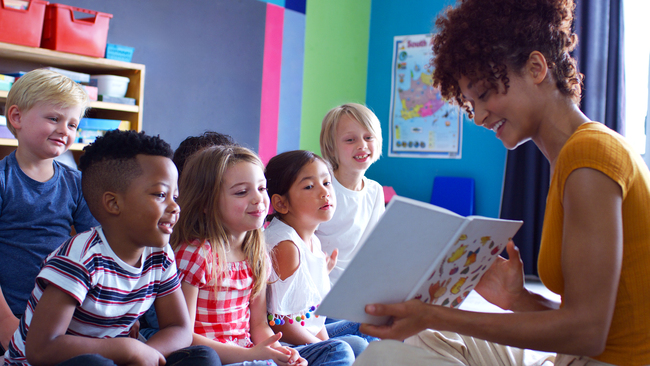
Beyond typical classroom uses for fluency and decoding practice, or as mentor texts for writing, quality children's literature creates the opportunity for readers to experience the world. Rudine Simms Bishop, who used the metaphor of books as windows, mirrors, and sliding glass doors, described reading as a transformational experience. Books that serve as mirrors allow students to feel acknowledged and validated in their own experiences through characters like themselves. Books that serve as windows provide children with the opportunity to gain a glimpse into the lives of characters with different lived experiences. Books that function as sliding glass doors provide readers the opportunity to step into the lives and experiences of other people, allowing children to develop an awareness of the world beyond themselves. This experience is an important part of promoting tolerance and acceptance of differences.
The content of our libraries matters
Accurate and sensitive portrayals of characters in children's books are important because children learn about themselves and others through the literature to which they are exposed. Since children's literature provides opportunities for such profound experiences, educators have a powerful responsibility to provide students with excellent, high-quality texts. Because of this, it is necessary to examine the stories we introduce to our students.
Past research has examined representations of diversity in children's books, including the harmful effects of lack of representation and a persistent lack of diversity. When white, able-bodied characters are privileged while other races and abilities are either largely ignored or misrepresented, racism and ableism continue to be maintained and reinforced through the books children experience. Attitudes of ableism are also subtly maintained when diverse abilities are missing.
A history of missing voices
Children's books have historically been challenged, especially when the topics and characters are diverse. The Cooperative Children's Book Center reported that the number of published diverse children's books dropped by 4% in 2025. Research has shown that diverse books face disproportionate bans, especially if they include BIPOC, LGBTQA+, and disability representation.
Authors and illustrators representing diverse backgrounds are also often left out of classroom libraries. For many students, the majority of the literature they encounter in school portrays white, middle class, able-bodied characters. In addition, some books that include specific cultural groups may be written from outsider perspectives and therefore do not always represent the reality of lived experiences.
With fewer diverse books overall in classroom and school libraries, there are fewer opportunities to see themselves represented and to practice empathy through stories.
Educator resources
Teachers are trained to use children's literature in their classrooms through read-alouds, think-alouds, as lesson hooks, for schema development, to start conversations, and for the shared experience of a story. Children's literature is the pivotal tool in this process. Research suggests, however, that even though educators tend to be book enthusiasts, they may be hesitant to use diverse literature due to unfamiliarity with resources. To that end, there are a variety of useful resources available for educators to help navigate the world of diversity in children's literature in a respectful and culturally responsive manner.
One way to ensure the quality of books in educators' classroom is to locate award-winning books. The American Library Association (ALA) website is a resource that features an extensive database for ALA book, print, and media award lists and information on issues related to diversity, advocacy, and legislation. In addition to the more famous Newbery and Caldecott awards, there is recognition for different intersections of diversity. For example, the Schneider Family Book Awards honor representations of disability, the Coretta Scott King Book Awards are awarded to Black authors and illustrators, the Pura Belpré Award for excellent Latinx representation, and the Stonewall Book Awards for representations of the LGBTQA+ experience.
There are a variety of searchable databases dedicated to celebrating diversity in children's literature as well. The Diverse Families Bookshelf is a beneficial tool, as the collection is divided into specific categories and topics. For example, if an educator were looking for a quality book featuring multiracial families, the database would provide a list of matching titles. The IRIS Center is another searchable database for categories of varying abilities.
Perhaps one of the most valuable resources for educators is to learn directly from the voices of the people and cultures represented in children's books. Many blogs and websites feature the work of scholars, educators, and advocates who provide extensive reviews and recommendation lists of authentic and respectful children's literature. The authors of these blogs take the time to explain why certain books are considered offensive and inappropriate representations. The table below provides a list of recommended resources for educators interested in doing the work to eliminate bias from their classroom libraries. The works of these scholars and educators are essential resources for evaluating book collections.
Teachers can take steps to ensure diversity in their own classroom libraries, including reflecting on the content and accuracy of books and locating new texts. The transformational process of stepping through the metaphorical sliding glass door allows children to experience identities other than their own. The content of our libraries matters!
Selected resources on diversity in children's literature
| Awards and book lists |
Websites and blogs |
| ALA Top 100 Banned/Challenged Books |
American Indians in Children’s Literature |
| American Indian Youth Literature Awards |
American Library Association |
| American Indians in Children’s Literature Best Books List |
CCBC Blog |
| Arab American Book Award |
Diverse Families Bookshelf |
| Asian/Pacific American Award for Literature |
Hijabi Librarians |
| CCBC Kids' Book Choice Award |
Indigo’s Bookshelf: Voices of Native Youth |
| Coretta Scott King Book Award |
Latin@s in Kid Lit |
| Dolly Gray Children’s Literature Award |
Reading While White |
| Pura Belpré Awards |
The Booklist Reader |
| Schneider Family Book Award |
The IRIS Center |
| Stonewall Book Awards |
The Open Book Blog |
Further reading material
You may also like
5 Summer Activities Libraries Can Host to Boost Engagement
Please RSVP: Inviting Children's Picture Books Back Into the Classroom